Elephant Painting
The Canvas of Giants: An Introduction to Jaipur’s Living Art
In Rajasthan’s vibrant capital, Jaipur, tradition and color weave together to permeate nearly every aspect of daily life, transforming the urban landscape into a living museum of India’s regal past. Among the myriad of visually arresting customs that define this region, the age-old practice of traditional elephant painting stands out as a breathtaking spectacle. This unique art form transforms majestic pachyderms into moving canvases of intricate design and brilliant, eye-catching hues. Rooted deeply in the region's royal history and religious mythology, the adornment of elephants is far more than a mere aesthetic endeavor designed for the modern tourist's camera lens. It is a profound celebration of life, a vivid nod to an illustrious past, and a contemporary attraction that sits precisely at the complex intersection of cultural heritage, experiential tourism, and evolving animal welfare practices. As these massive, gentle creatures walk through the pink-hued streets of the old city or navigate the dusty pathways leading toward the ancient forts, they carry with them the undeniable legacy of a bygone era.
Historically, elephants have held an incredibly outsized and revered role in the cultural and spiritual tapestry of the Indian subcontinent, recognized as potent symbols of power, prosperity, and divine blessing. In the medieval era of Rajputana, kings and local chieftains understood that true authority was best projected from the elevated back of an elephant. These magnificent creatures were vital to the region's military strength, carrying Rajput royals into fierce battles and leading triumphant processions through city gates after victorious campaigns. To accurately reflect a ruler's immense wealth and elevated status, their royal elephants were meticulously adorned in opulent silk and velvet garments, while their massive tusks were often ringed with heavy gold or polished silver. Furthermore, in Hindu mythology, the elephant is deeply venerated by millions, most notably realized through Lord Ganesha, the beloved elephant-headed deity widely worshipped as the remover of obstacles. Consequently, decorating these animals was historically, and remains today, a deeply ingrained act of reverence and spiritual devotion, seamlessly blending religious worship with unparalleled royal pageantry.
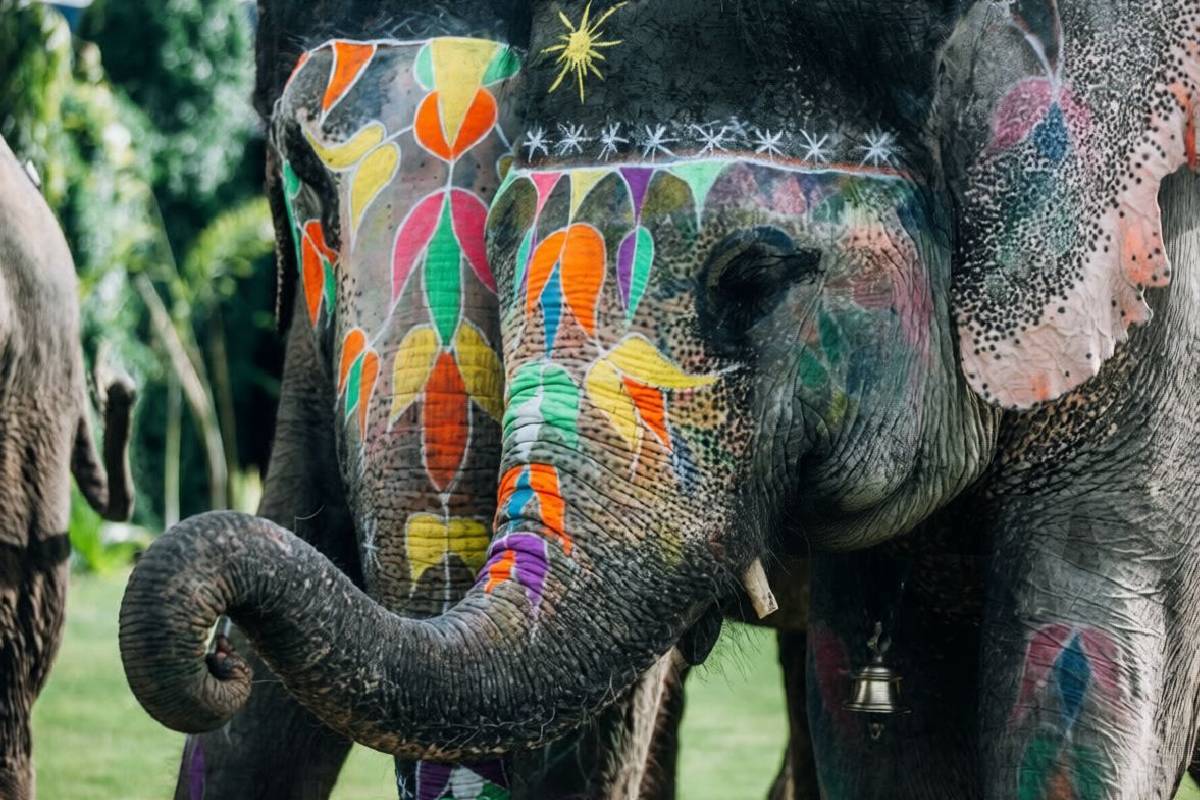
The execution of elephant painting is characterized by its meticulous detail and the immense patience required from both the artist and the animal. Skilled local artisans, working closely alongside the elephants' lifelong caretakers, known traditionally as mahouts, spend countless hours painstakingly transforming the animals before major events. The broad forehead, the long, sweeping trunk, and the massive, flapping ears serve as the primary focal points for this expansive living canvas. Armed with fine brushes, the artists carefully apply classic Rajasthani designs that have been passed down through generations. These include elaborate floral arrangements, perfectly symmetrical mandalas, swirling paisley patterns, and traditional, auspicious motifs like blooming lotuses and strutting peacocks. The trunk is often outlined with sweeping, delicate vines that magically accentuate its natural, fluid movement, while the wide ears are bordered with intricate, lace-like geometric shapes that frame the animal's wise eyes. Every single stroke requires an incredibly steady hand, as the thick skin of the elephant is deeply textured, wrinkled, and constantly shifting, making the creation of these flawless, symmetrical designs a true testament to the painter's unwavering focus and remarkable skill.
The pigments used in this elaborate process mirror the energetic and bold palette of Rajasthan itself. The designs feature bright, shocking pinks, deep marigold yellows, vivid royal blues, and striking emerald greens that pop magnificently against the elephants' natural grey skin. In decades past, the paints applied for these festivals were sometimes synthetic and could potentially be harsh or irritating to the animal's sensitive hide. However, with a growing, necessary, and global awareness of animal welfare in recent years, there has been a conscious and industry-wide shift throughout Jaipur towards exclusively using temporary, non-toxic, and organic colors. Today, responsible mahouts and caretakers utilize natural dyes carefully made from ground turmeric, soothing sandalwood paste, natural chalk, and dried vegetable or flower petal extracts. This vital, modern adaptation ensures that the undeniable aesthetic appeal of the tradition does not in any way harm the animal. Furthermore, these natural, earth-based colors wash away easily and harmlessly during the elephants' routine evening baths in the nearby lakes, effectively turning the act of painting into a temporary grooming ritual rather than a permanent imposition on the creature.
The sheer splendor of painted elephants is most prominently displayed during Jaipur’s famous seasonal festivals, drawing thousands of spectators from around the globe. While the historically iconic Elephant Festival has faced cancellations in recent years due to animal rights concerns, the vibrant tradition continues to thrive organically during other major cultural celebrations. During the monsoon celebration of the Teej Festival, vibrantly painted elephants majestically lead processions alongside elaborately decorated camels, noble Marwari horses, and energetic folk dancers. Similarly, during the Gangaur Festival, beautifully decorated elephants traverse the winding streets of the walled city, adding an unmatched level of grandeur and historical authenticity to the jubilant festivities. Ultimately, elephant painting in Jaipur remains a multifaceted tradition that beautifully captures the essence of Rajasthan's royal heritage. As the world modernizes, the survival of this striking art form relies entirely upon striking a delicate balance, preserving the breathtaking visual spectacle of a rich cultural history while maintaining an unwavering commitment to the utmost respect, care, and well-being of the gentle giants themselves.