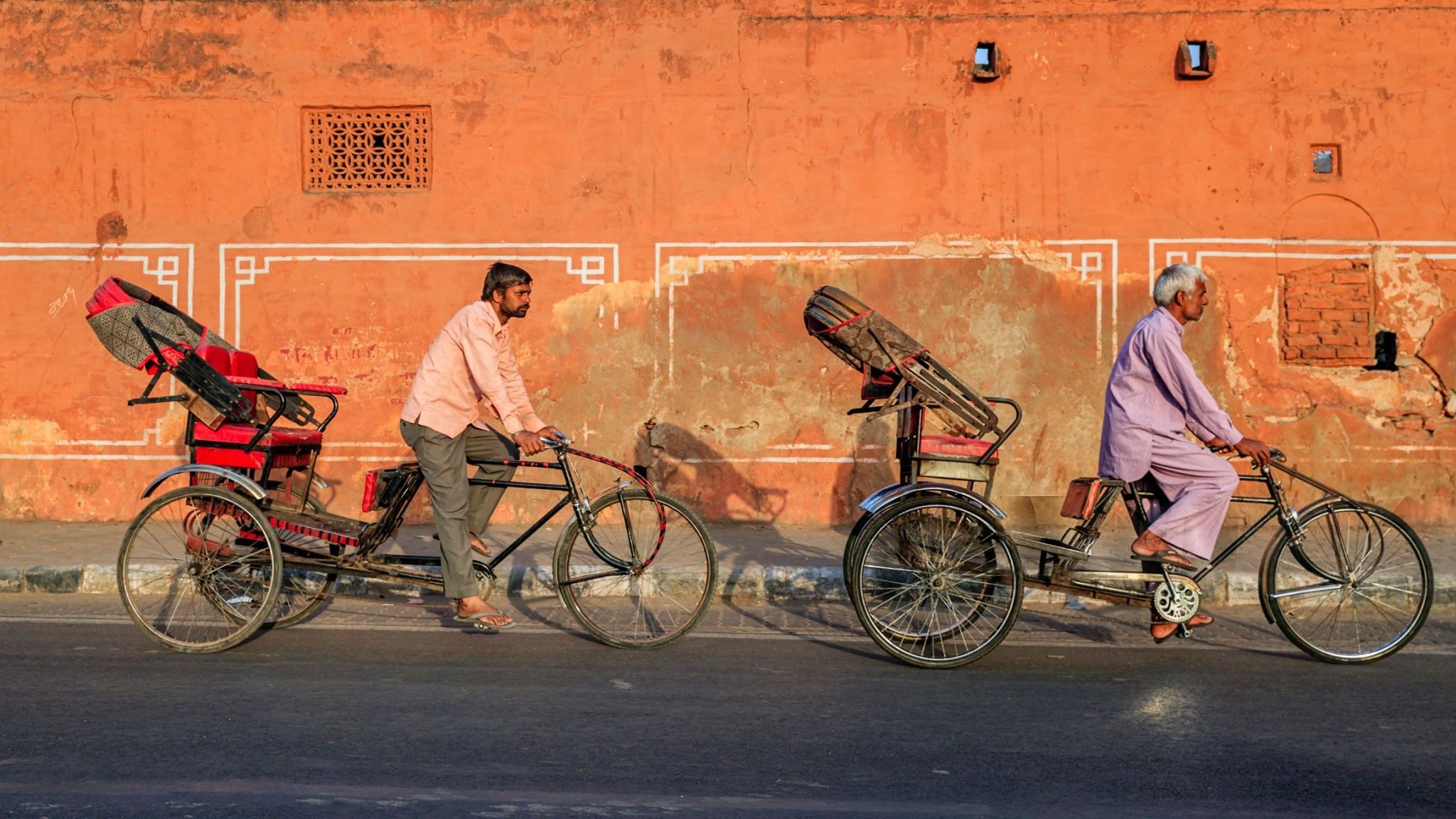
Rickshaw Riding
Experience India’s Streets, Markets, and Local Life from a Different Perspective
A rickshaw ride in India offers a lively and close-up way to experience the character of its cities. Rather than moving quickly from one attraction to another, travelers can slow down and observe the streets as they really are: crowded markets, tiny shops, food vendors, religious sites, heritage buildings, residential lanes, and constant local activity. This style of travel is especially rewarding in older city areas where the atmosphere is often strongest and where narrow roads make larger vehicles less practical.
India uses several forms of rickshaw transport. Cycle rickshaws are commonly found in traditional neighborhoods and busy market districts, while auto-rickshaws are widely used for short urban journeys. Cycle rickshaws move at a slower pace, which makes them ideal for travelers who want to notice architectural details, street scenes, and everyday interactions. Auto-rickshaws are quicker and better suited for moving between different areas while still keeping travelers connected to the city around them.
One of the most memorable places to experience a rickshaw ride is Old Delhi. Areas around Chandni Chowk, Jama Masjid, and the historic bazaars are full of activity from morning until evening. A ride through these lanes may pass spice shops, fabric sellers, jewelry stores, sweet shops, food stalls, temples, mosques, and centuries-old buildings. The streets can be crowded and noisy, but that is also what gives the experience its energy and sense of place.
In Jaipur, rickshaw rides provide another perspective on city life. Travelers can move through traditional market areas, colorful streets, handicraft districts, and neighborhoods influenced by Rajasthan’s royal architecture. The slower pace makes it easier to appreciate decorative facades, shop displays, local temples, and the everyday routines that continue alongside the city’s historic monuments.
Other destinations offer their own variations of the experience. In Kolkata, rickshaw transport forms part of the city’s long urban history, while in Varanasi, short rickshaw journeys can help travelers move between crowded streets, markets, temple areas, and access points leading toward the ghats. Each city has its own traffic patterns, local customs, and style of rickshaw travel, so no two rides feel exactly the same.
One of the biggest advantages of a rickshaw is access. These small vehicles can often enter streets that buses and private cars cannot. This makes them useful for reaching older markets, heritage quarters, hidden lanes, and local neighborhoods where many authentic city experiences take place. A short ride can easily become part of a broader cultural route that includes food stops, craft shops, monuments, religious sites, or traditional bazaars.
For travelers interested in photography, a rickshaw ride can be particularly rewarding. The viewpoint changes constantly, revealing colorful shopfronts, street vendors, old buildings, crowded intersections, religious activity, and everyday urban scenes. Because the ride moves slowly, there is more time to notice small details and capture the atmosphere. Travelers should still ask permission before taking close photographs of individuals and avoid treating private moments as tourist attractions.
Rickshaw rides can also create opportunities for brief conversations with local drivers. Many drivers know their neighborhoods extremely well and understand the quickest routes, popular markets, busy junctions, and useful shortcuts. Even simple interactions can add local context to the journey. When a guide is included, the experience can become more informative, with explanations about the history, culture, architecture, and communities along the route.
Travelers should expect rickshaw rides to feel active and informal rather than polished or luxurious. Traffic can be intense, roads may be uneven, and city streets are often crowded. Comfortable clothing, secure personal belongings, and a bottle of water are practical choices. During warmer months, morning or late-afternoon rides can be more pleasant than traveling in the middle of the day.
Families, couples, solo travelers, and small groups can all enjoy this type of city experience. It is especially useful for visitors who want to explore traditional neighborhoods without walking long distances. The combination of slow movement and easy access creates a balance between convenience and immersion, allowing travelers to stay connected with the surroundings rather than simply pass through them.
Ultimately, rickshaw riding in India is about experiencing the city from within its everyday movement. The value of the ride comes from the details: a market opening for the day, the smell of street food, a temple hidden between shops, a narrow lane filled with bicycles, or a conversation with a local driver. These small moments create a richer understanding of Indian urban life. For travelers who want to go beyond famous monuments and discover the personality of a city at street level, a rickshaw ride offers a simple, engaging, and memorable way to explore.