Holi
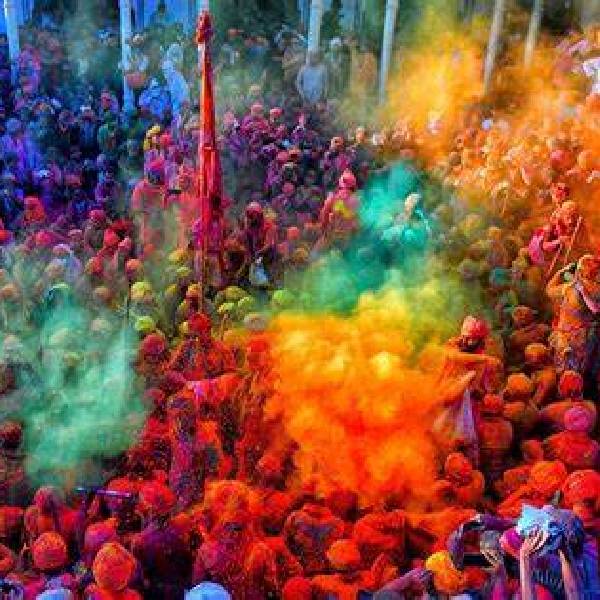
Holi in India is an energetic spring celebration known for bright colours, cheerful gatherings, music, traditional food, and a strong sense of togetherness. Often recognised as the Festival of Colours, Holi arrives as winter gives way to warmer days, and communities welcome a fresh season. Streets, courtyards, neighbourhoods, and public spaces fill with people applying coloured powder to one another, sharing sweets, dancing, and spending time with friends and relatives. In 2026, the main Holi celebration takes place on 4 March, following the traditional Holika Dahan observance on the previous evening.
The festival carries meanings that go far beyond its colourful appearance. Holi is associated with renewal, reconciliation, faith, and the idea that positive forces eventually overcome negativity. People often use the occasion to reconnect with relatives and friends, put aside old disagreements, and begin the new season with a lighter spirit. This combination of cultural symbolism and spontaneous celebration has made Holi one of the most recognisable Indian festivals around the world.
One tradition connected with Holi tells the story of Prahlada, a devoted follower of Lord Vishnu. According to Hindu tradition, Prahlada remained committed to his faith despite opposition from his father, King Hiranyakashipu. The king’s sister, Holika, attempted to harm Prahlada by entering a fire with him, believing that she would remain protected. Instead, Prahlada survived while Holika was destroyed. The story became associated with faith overcoming arrogance and harmful intentions.
This tradition is remembered through Holika Dahan, held on the evening before the colourful celebrations. Communities gather around ceremonial bonfires created from wood and other combustible materials. People may offer prayers, walk around the fire, and spend time together as the flames burn. The ritual symbolically represents leaving behind negativity and preparing for a new beginning before the more playful celebration begins the following day.
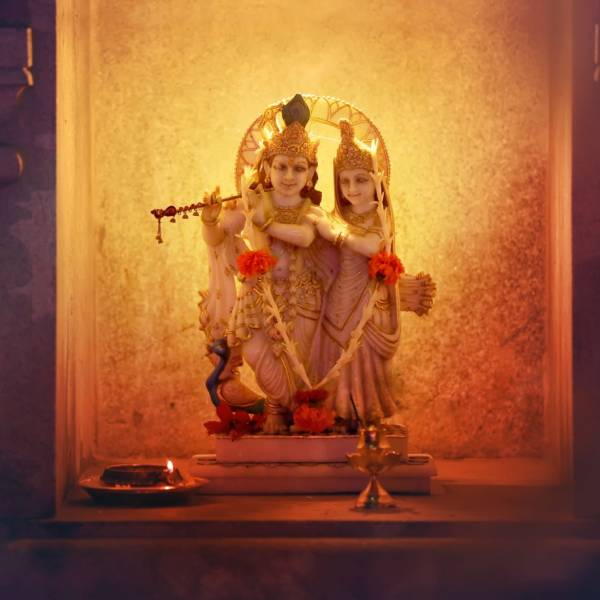
Another side of Holi is closely connected with the stories of Lord Krishna and Radha, particularly in the Braj region of northern India. Traditions describe Krishna playfully applying colour to Radha and his companions, helping shape Holi’s association with affection, friendship, and joyful interaction. This connection remains especially visible in places linked with Krishna’s life, where celebrations often begin well before the main festival day.
Mathura and Vrindavan are among the most fascinating destinations for travelers who want to witness traditional Holi celebrations. Temples, streets, and public spaces become filled with devotional songs, flowers, colours, and large gatherings. Nearby Barsana and Nandgaon are also known for their distinctive local customs, creating a festival experience strongly connected with Krishna traditions and regional culture.
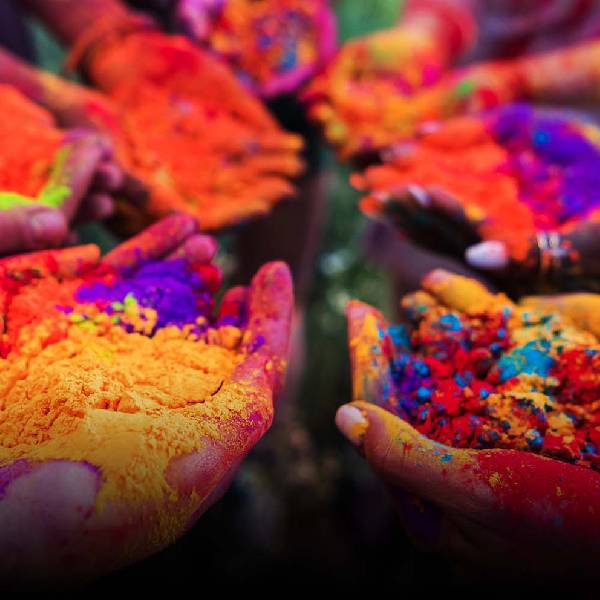
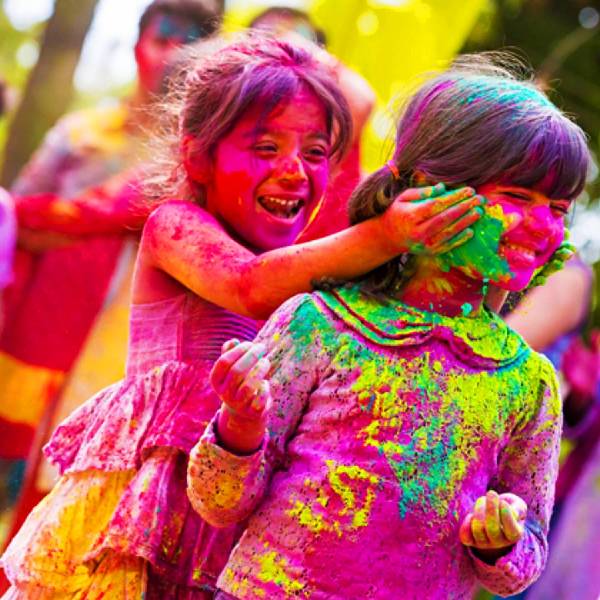
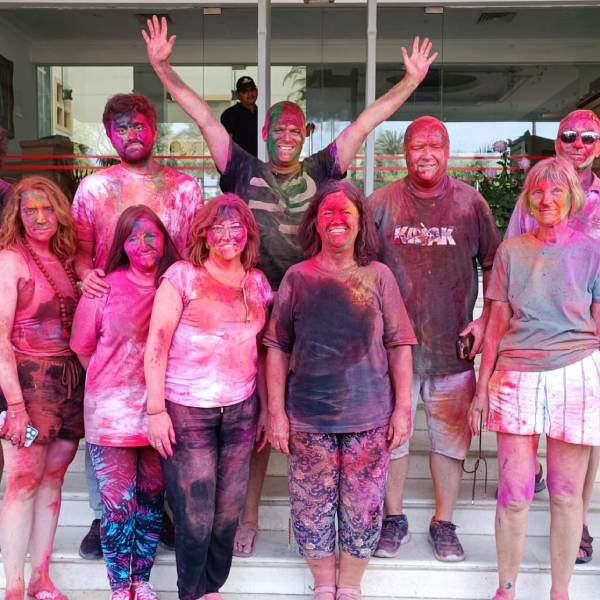
In many other Indian cities, Holi morning begins with friends and families gathering outdoors with gulal, the brightly coloured powder associated with the festival. People gently apply colour to one another or join larger celebrations involving music, dancing, and water. Children often use water-filled balloons or pichkaris, while groups move between homes and neighbourhoods exchanging greetings. The atmosphere can quickly become lively as clothing, faces, and streets take on layers of red, pink, yellow, green, purple, and blue.
Food is another important part of the celebration. Families prepare sweets, snacks, and festive dishes to share with visitors throughout the day. Gujiya, a sweet pastry filled with ingredients such as khoya and nuts, is particularly associated with Holi in northern India. Other treats may include malpua, dahi vada, regional sweets, and savoury snacks. Traditional drinks such as thandai are also connected with the festival in some regions, although recipes and customs differ between communities.
Holi changes character as travelers move across India. Delhi offers energetic neighbourhood celebrations and organised events, while Jaipur combines colour with the historic surroundings of Rajasthan. Uttar Pradesh provides some of the strongest Krishna-related traditions, particularly around Mathura, Vrindavan, Barsana, and Nandgaon. Other states celebrate with their own music, foods, rituals, and community customs, demonstrating how a shared festival can develop different regional identities.
For international travelers, participating in Holi can be an unforgettable cultural experience, but preparation makes the day more enjoyable. Older clothing is recommended because coloured powders can stain fabric. Sunglasses can help protect the eyes, while covering cameras and phones reduces the risk of damage from powder or water. Applying a little moisturiser or oil beforehand can also make colour easier to wash from the skin afterward.
Visitors should remember that participation should always be respectful and consensual. Not everyone wants powder or water applied to them, so asking before involving strangers is good practice. Travelers should also be mindful around temples, private homes, children, and religious ceremonies. Choosing organised celebrations, traveling with knowledgeable local companions, and avoiding overly crowded areas can make the experience more comfortable.
Photography during Holi can produce extraordinary images because of the movement, colour, expressions, and festive atmosphere. However, cameras should never come before personal respect. Close photographs should be taken only with permission, particularly during prayer or private family activities.
Ultimately, Holi in India is memorable because it transforms ordinary spaces into places of colour, laughter, friendship, and shared celebration. Behind the playful atmosphere lies a deeper message of renewal, faith, forgiveness, and human connection. Whether experienced among the Krishna traditions of Mathura and Vrindavan, the lively streets of Delhi, or a smaller neighbourhood gathering, Holi gives travelers an unforgettable opportunity to witness India’s cultural spirit at its most joyful and expressive.
.jpg)