Durga puja
Durga Puja is one of India’s most vibrant religious and cultural celebrations, especially in West Bengal, where the festival transforms cities, towns, and neighborhoods into lively spaces filled with prayer, art, music, food, and community gatherings. Dedicated to Goddess Durga, the festival celebrates her victory over the demon Mahishasura and represents the triumph of good over evil, courage over fear, and divine strength over destructive forces. Although Durga Puja is observed in many parts of India, Kolkata remains its most famous cultural center, attracting visitors who come to experience elaborate pandals, beautifully crafted idols, traditional rituals, and the extraordinary festive atmosphere.
The wider religious observance extends across several days, but the most intense celebrations traditionally take place from Shashthi through Vijayadashami. In 2026, the main Durga Puja period in Kolkata runs from 17 October to 21 October, with Saptami, Ashtami, Navami, and Dashami forming the heart of the festival. The exact timing of rituals may vary according to local traditions and the lunar calendar, so travelers interested in specific ceremonies should confirm schedules closer to their visit.
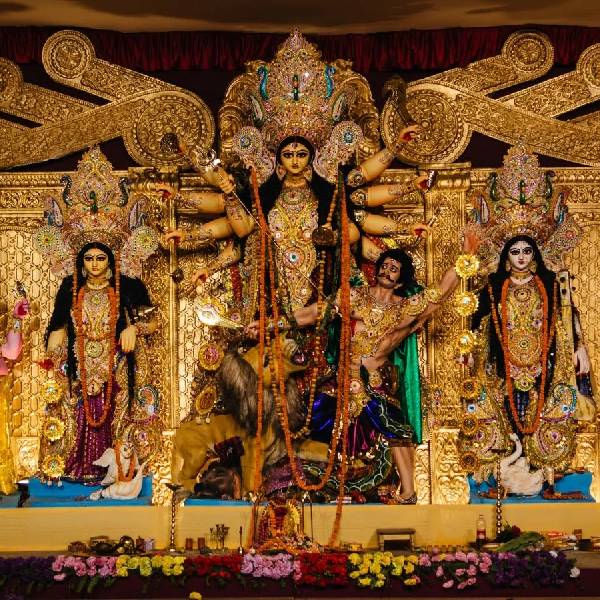
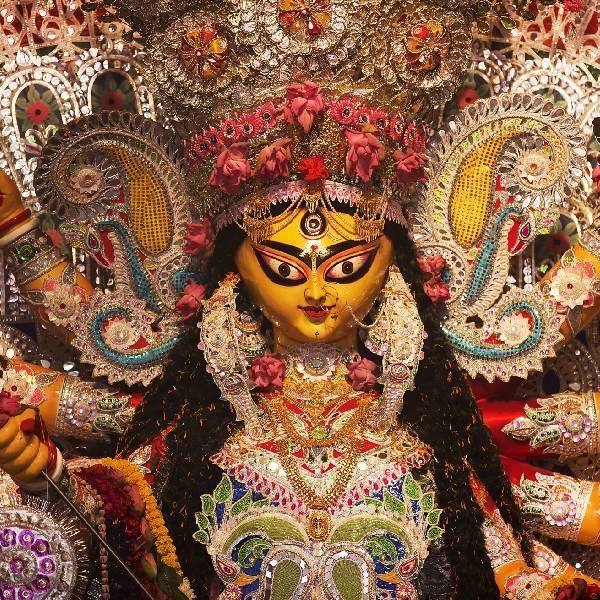
Preparations begin months before the festival. Skilled artisans create clay images of Goddess Durga, often shown defeating Mahishasura and surrounded by deities such as Lakshmi, Saraswati, Ganesha, and Kartikeya. In Kolkata, many of these sculptures are produced in traditional artisan neighborhoods before being transported to temporary festival spaces known as pandals. These structures have evolved far beyond simple places of worship and often become extraordinary works of temporary architecture, using creative themes, lighting, sculpture, craft, and design to transform entire streets and neighborhoods.
Pandal hopping is one of the defining experiences of Durga Puja. Families, groups of friends, and visitors move from one neighborhood to another, often staying out late into the night to admire different installations. Some pandals draw inspiration from temples and traditional architecture, while others explore contemporary art, environmental themes, social issues, or imaginative design concepts. The creativity changes every year, making each festival visually different from the one before. Kolkata effectively becomes an enormous open-air gallery where religion, craftsmanship, and public art come together. This cultural significance led UNESCO to inscribe Durga Puja in Kolkata on the Representative List of the Intangible Cultural Heritage of Humanity in 2021.
Religious rituals remain at the center of the celebration. Devotees gather before the goddess for prayers, flower offerings, aarti, and ceremonial worship. Pushpanjali, the offering of flowers accompanied by prayers, is an important part of the morning rituals, particularly during Ashtami. The atmosphere around the pandals is often filled with the powerful rhythm of the dhaak, a traditional Bengali drum that has become inseparable from the sound of Durga Puja. Another captivating tradition is the Dhunuchi dance, in which performers hold clay vessels filled with burning incense and move gracefully to the energetic rhythm of traditional drums.
Durga Puja is also deeply connected with social life. Families reunite, people wear new clothes, friends meet for long evenings of pandal visits, and community groups organize performances, music, theater, and cultural programs. Food is an equally important part of the celebration. Temporary stalls and neighborhood eateries serve Bengali specialties, sweets, snacks, and festive meals, turning the streets into lively social spaces. For visitors, sampling local cuisine while exploring illuminated pandals can be one of the most enjoyable ways to experience the festival beyond the formal rituals.
The final day, Vijayadashami or Dashami, carries a mixture of celebration and emotion. In many Bengali communities, married women take part in Sindoor Khela, applying vermilion to the goddess and to one another before farewell rituals begin. Later, the Durga idols are carried through the streets in processions accompanied by music and dancing before being immersed in rivers or other designated water bodies. The immersion symbolizes the goddess leaving her temporary earthly home and returning to her divine abode, bringing the annual celebration to a close.
For travelers, Kolkata is the most rewarding place to experience Durga Puja, particularly if the goal is to see large-scale pandals and street celebrations. However, the festival is also observed across West Bengal and in many other Indian cities. Visitors should expect heavy crowds, temporary road closures, late-night activity, and increased demand for hotels and transport. Comfortable footwear is essential because exploring several pandals often requires considerable walking, and planning routes in advance can save time during the busiest evenings.
Photography opportunities are exceptional, but religious ceremonies and individual worshippers should be treated respectfully. Visitors should avoid blocking prayer areas, ask permission before taking close portraits, and follow instructions from festival volunteers. Some popular pandals may have separate entry queues or crowd-control systems, so patience is important.
Durga Puja in India is far more than a religious occasion. It is a celebration of devotion, artistic imagination, family bonds, community identity, craftsmanship, music, food, and shared cultural pride. From the first glimpse of a newly crafted Durga idol to the final immersion on Vijayadashami, the festival unfolds in an atmosphere filled with vibrant energy, devotion, and emotion. For travelers interested in experiencing living Indian culture at its most expressive, Durga Puja offers an unforgettable combination of faith, creativity, and community celebration.
.jpg)