Dussehra
Few Indian celebrations demonstrate the country’s cultural diversity as clearly as Dussehra. Also recognised as Vijayadashami or Dasara, the occasion arrives near the close of the Navratri period and carries a broad message of overcoming wrongdoing, restoring balance, and choosing a righteous path. What makes the festival particularly fascinating is that there is no single nationwide style of celebration. The story, rituals, public events, and even the atmosphere can change considerably depending on where in India the festival is experienced. In 2026, Dussehra will be observed on 20 October.
Across much of northern India, the celebration draws its central inspiration from the Ramayana. The festival recalls the defeat of Ravana by Lord Rama, a story that has been retold through religious practice, family traditions, theatre, music, and public gatherings for generations. Rather than presenting the story only through worship, many communities bring it to life through dramatic performances known as Ramlila.
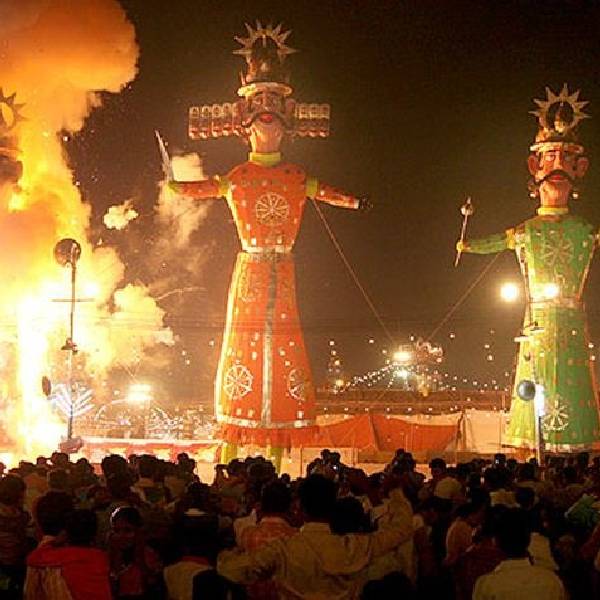
These performances often unfold over several evenings. Local actors portray important characters and recreate major events from Rama’s journey through dialogue, costumes, music, and narration. Some productions are intimate neighbourhood events, while others attract thousands of spectators. The final evening usually reaches its most dramatic moment when large representations of Ravana and other figures connected with the story are destroyed by fire.
The spectacle carries a symbolic message rather than serving as entertainment alone. The disappearance of the towering effigies in flames represents the rejection of destructive qualities such as pride, injustice, and misuse of power. Families gather around open grounds to witness the event, while nearby spaces may be filled with food stalls, games, vendors, and temporary fairs. The result is an unusual mixture of storytelling, faith, community activity, and celebration.
Delhi provides one of the most accessible settings for visitors interested in this northern Indian tradition. Different parts of the capital organize their own Ramlila programs, and the festival atmosphere can extend far beyond the main performance grounds. Busy markets, festive shopping, illuminated streets, and family outings make the period especially energetic.
Travel south to Mysuru, and Dussehra takes on an entirely different identity. Here, Dasara is closely linked with royal history and devotion to Goddess Chamundeshwari. Instead of concentrating on Ravana effigies, the city becomes known for processions, heritage ceremonies, performing arts, decorated public spaces, and the spectacular illumination of Mysuru Palace.
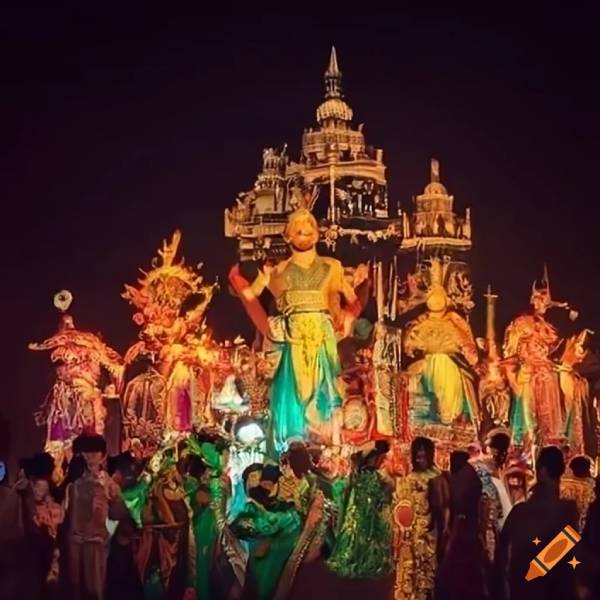
The palace becomes one of the defining visual features of the celebration. After sunset, its illuminated façade draws large crowds and creates a striking backdrop for the surrounding festivities. Music, dance, cultural exhibitions, folk performances, and ceremonial events continue during the festival period, reflecting the strong connection between the celebration and Mysuru’s historic royal traditions.
Vijayadashami brings one of the city’s most anticipated events, the Jumbo Savari. The ceremonial procession moves through Mysuru with decorated elephants, performers, musicians, and cultural groups. At its centre is the representation of Goddess Chamundeshwari, giving the procession both religious and historic importance.
The Himalayan valley of Kullu presents yet another interpretation. Here, Dussehra is not simply the final day of a preceding festival period. Instead, the local celebrations begin around Vijayadashami and continue afterward. Village deities from surrounding mountain communities are brought to Kullu, creating an extraordinary gathering that reflects the religious traditions of the region.
Decorated palanquins, traditional music, local ceremonies, and the presence of Lord Raghunath give Kullu Dussehra its distinctive identity. The surrounding fairs and cultural activities add a social dimension, while the gathering of deities demonstrates how strongly community traditions remain connected with the landscape and villages of Himachal Pradesh.
In West Bengal, Vijayadashami carries a more emotional atmosphere because it marks the conclusion of Durga Puja. After several days of worship and celebration, devotees prepare to bid farewell to Goddess Durga. Images of the goddess are taken through the streets before immersion, creating a final moment that combines devotion, celebration, and a sense of departure.
For travelers, these differences make Dussehra far more interesting than a festival experienced in only one location. Delhi offers theatrical retellings and dramatic effigy burning. Mysuru presents royal pageantry and illuminated heritage. Kullu introduces visitors to Himalayan deity traditions, while West Bengal connects the day with the closing rituals of Durga Puja. Each region expresses the wider idea of victory and renewal through its own cultural language.
The festival period also changes ordinary daily life. Markets become crowded with people buying clothes, sweets, flowers, gifts, and religious items. Families visit relatives, attend local events, prepare festive meals, and participate in ceremonies. Public spaces remain active well into the evening, giving visitors a chance to observe not only formal rituals but also the social side of Indian festivals.
Anyone planning to experience Dussehra should prepare for busy streets, altered traffic arrangements, and large gatherings around major celebration areas. Accommodation and transport are best arranged in advance, particularly in destinations known for large-scale events. Comfortable footwear is useful because visitors may need to walk between viewing areas, markets, temples, and performance grounds.
Photography can add greatly to the experience, especially during processions, performances, decorated streets, and evening celebrations. However, religious participation should never be treated simply as a visual attraction. Visitors should give worshippers space, follow local instructions, and seek permission before taking close photographs of individuals.
At its heart, Dussehra in India is a celebration shaped by storytelling, faith, community memory, and regional identity. The same festival can appear as fire against an evening sky in Delhi, glowing palace architecture in Mysuru, a gathering of mountain deities in Kullu, or an emotional farewell to Durga in Bengal. Experiencing these varied traditions reveals something important about India itself: shared cultural ideas can take many forms while continuing to connect communities across generations.
.jpg)