Navaratri
Navaratri is a nine-night Hindu festival devoted to the divine feminine and celebrated across India through prayer, fasting, music, dance, temple worship, and community gatherings. The name comes from the Sanskrit words for “nine” and “night,” reflecting the festival’s nine evenings of devotion. While customs vary significantly between regions, the celebration is closely associated with Goddess Durga and the many qualities she represents, including courage, wisdom, protection, compassion, and inner strength. In 2026, Sharad Navaratri is observed from 11 October to 19 October, followed by Vijayadashami or Dussehra on 20 October.
Each day of Navaratri traditionally honours a different manifestation of the goddess. The nine forms, collectively known as Navadurga, are Shailaputri, Brahmacharini, Chandraghanta, Kushmanda, Skandamata, Katyayani, Kalaratri, Mahagauri, and Siddhidatri. Devotees may dedicate prayers, flowers, lamps, offerings, and devotional songs to the form associated with that particular day. For many worshippers, moving through these nine stages represents a personal spiritual journey focused on discipline, confidence, clarity, devotion, and positive transformation.
The festival is also connected with the traditional story of Goddess Durga’s battle against Mahishasura, a powerful demon whose defeat represents the overcoming of destructive forces. The struggle is remembered over the nine nights, while the following day celebrates victory and renewal. Although this religious narrative provides an important foundation, Navaratri has developed into a much broader cultural occasion where family traditions, regional performing arts, food, clothing, and community participation all have an important place.
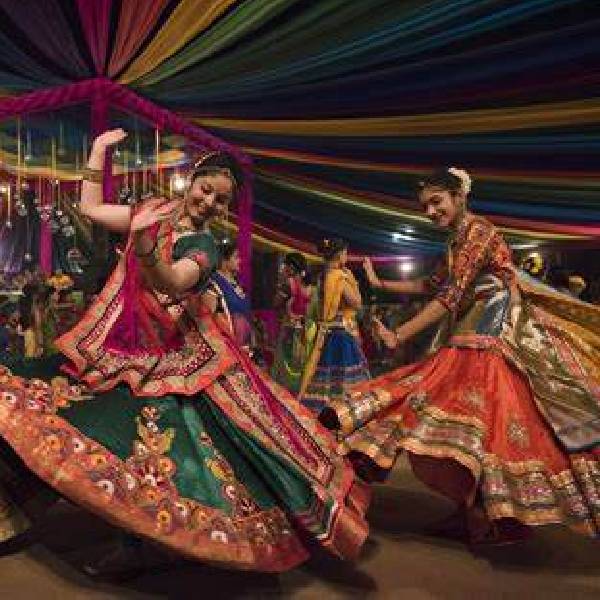
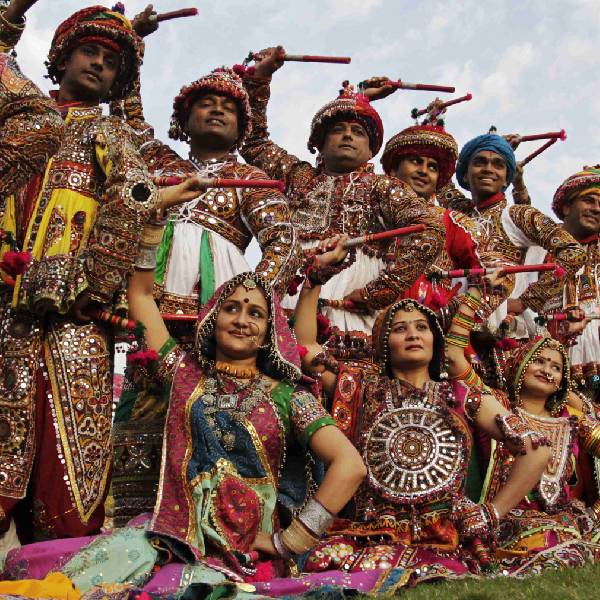
In Gujarat, Navaratri evenings are famous for Garba and Dandiya Raas. Large grounds, community halls, neighbourhood spaces, and festival venues fill with dancers dressed in colourful traditional clothing. Garba is commonly performed in circular formations, creating rhythmic patterns around a central sacred space, while Dandiya involves pairs or groups dancing with decorated wooden sticks. Music continues late into the evening at many organised celebrations, making Gujarat one of the most energetic destinations for travelers interested in experiencing the social side of Navaratri.
The character changes considerably in West Bengal, where the same seasonal period is dominated by Durga Puja. Temporary artistic structures known as pandals are created to house elaborately crafted images of Goddess Durga, while entire neighbourhoods become illuminated cultural spaces. Worship, music, art, food, and social gatherings continue over several days before the idols are ceremonially taken for immersion. Although Durga Puja has its own distinct traditions, its overlap with Navaratri demonstrates how devotion to the goddess takes very different forms across India.
Northern India brings another interpretation. In many communities, Navaratri overlaps with Ramlila, theatrical retellings of episodes from the Ramayana that lead toward Lord Rama’s victory over Ravana on Dussehra. Public stages, neighbourhood grounds, and cultural venues host dramatic performances featuring costumes, dialogue, music, and storytelling. The final victory celebrations give the festival period an additional theme of righteousness overcoming injustice.
Southern India preserves its own beautiful traditions. Families in states such as Tamil Nadu and Karnataka may arrange Golu or Kolu displays, creating carefully tiered collections of dolls and figurines representing deities, mythology, traditional occupations, family life, and cultural stories. Friends and relatives visit one another’s homes to view the displays, exchange small gifts, share food, and participate in devotional activities. These quieter household traditions provide a fascinating contrast to the large dance gatherings seen in western India.
Food and fasting also play an important role during Navaratri, although customs vary between families and regions. Some devotees follow vegetarian diets or avoid particular grains and ingredients, while others observe fasting only on selected days. Special meals are prepared using foods permitted within family or religious traditions. The purpose of these practices is often connected with discipline, devotion, simplicity, and focusing greater attention on prayer rather than ordinary routines.
For travelers, experiencing Navaratri can reveal several completely different sides of India depending on the destination. Ahmedabad and other parts of Gujarat are ideal for those interested in Garba and Dandiya, while Kolkata offers the artistic grandeur of Durga Puja. Delhi and northern cities provide Ramlila traditions, and southern destinations offer more intimate household and temple customs. India’s official tourism portal highlights this regional diversity as one of the defining features of the festival.
Visitors joining public celebrations should approach religious traditions respectfully. Modest clothing is appropriate around temples, while footwear may need to be removed before entering sacred areas. Travelers attending Garba or Dandiya events can participate when permitted, but learning basic movements beforehand can make the experience more enjoyable. Photography should never disrupt prayer, private ceremonies, or individual worshippers, and permission is recommended before taking close portraits.
At its heart, Navaratri in India brings together devotion and celebration in an extraordinary variety of forms. One evening may be filled with the rhythm of Garba in Gujarat, while another may involve prayer before a Durga image in Bengal, a Ramlila performance in northern India, or a beautifully arranged Golu display in the south. These differences are what make the festival so remarkable. Across nine nights, Navaratri becomes an expression of faith, creativity, community, resilience, and the enduring cultural importance of the divine feminine.
.jpg)